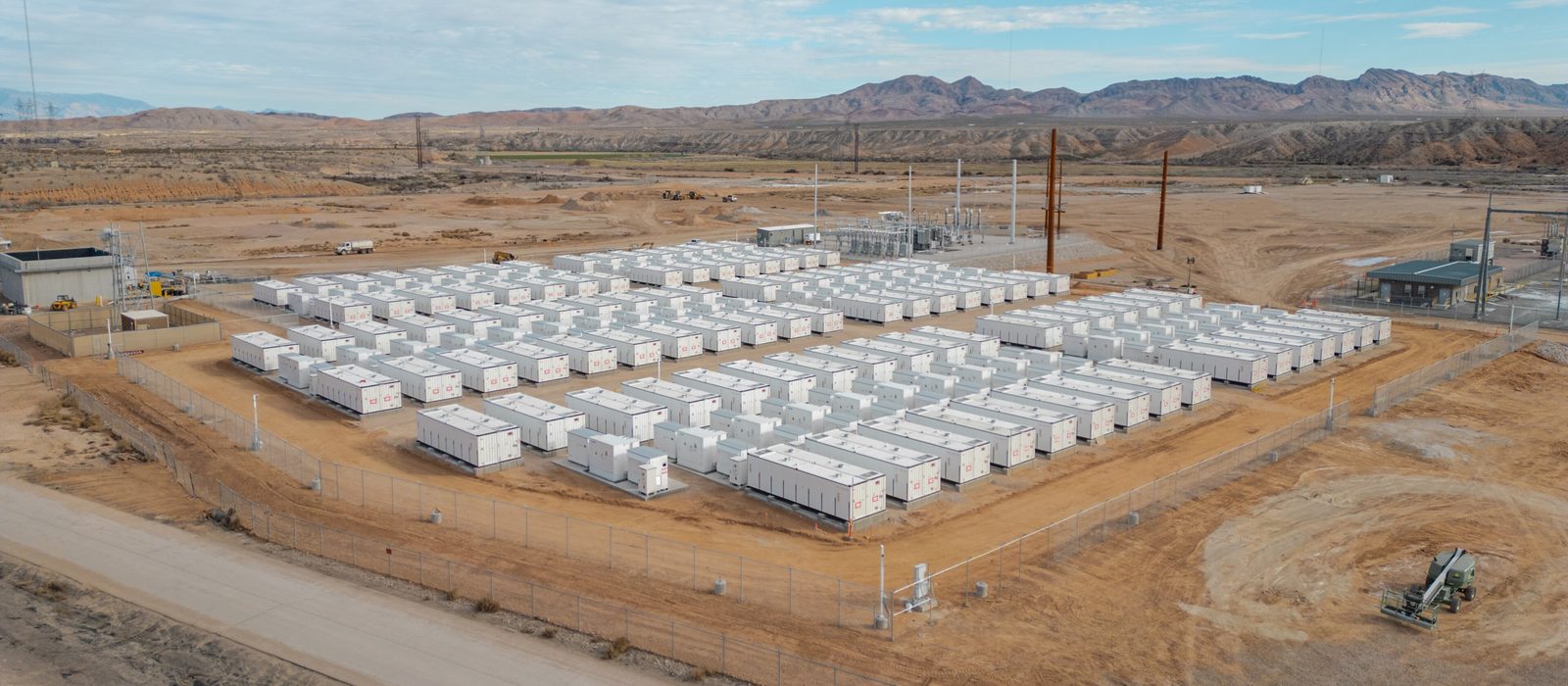
Every battery supplier will tell you a battery cuts your EB bill. That is only half true. It depends on which part of the bill you want to cut, and many HT factories in Tamil Nadu are shown the smaller saving as if it were the main one.
In short
- A TNEB HT bill has two parts a battery can touch: the demand charge and the time-of-day energy charge
- The demand charge (₹608 per kVA a month under TNERC Tariff Order No. 6 of 2025) is billed on the higher of your highest 15-minute demand or 90% of your contracted demand, so short spikes can set the whole month's bill
- Cutting those spikes is usually where a battery earns most; buying cheap night power and using it in the peak is a small extra
- Whether a battery at an HT connection may charge from the grid is not settled in Tamil Nadu, so ask TNPDCL before counting on it
- Check your own 15-minute demand data before you ask anyone for a battery price
Your TNEB HT bill has two charges a battery can touch. One depends on when you use power. The other depends on how much power you draw at one moment. A battery can help with both, but usually only the second one pays well. Here is how to tell which applies to you, using your own bill.
The time-of-day gap: smaller than it looks
Under TNERC Tariff Order No. 6 of 2025 (in force from 1 July 2025), energy charges for most HT categories change with the time of day:
- Peak hours, 6–10 am and 6–10 pm: 25% more than the normal rate.
- Night, 10 pm–5 am: 5% less than the normal rate.
- The rest of the day: the normal rate.
So the idea sounds simple: charge a battery at night, use the power in the morning peak, and do the same again in the day for the evening peak. The peak rate is about 32% higher than the night rate.
In practice, the gain is small. A battery gives back less power than it takes in, part of its charge has to be kept back, and it wears a little with every cycle. On our battery storage page we have worked this out on TNERC rates: shifting power into the peak is a small extra, and rarely enough on its own to pay for a battery. There is also a bigger question, covered below: whether you are allowed to charge it from the grid at all.
Where the real saving is: the demand charge
The charge that moves the needle is the demand charge.
Under the same TNERC order, HT demand is billed at ₹608 per kVA per month, on whichever is higher:
- your highest 15-minute demand that month (your recorded maximum demand, or MD), or
- 90% of your contracted demand.
That "whichever is higher" is the trap. A big motor starting, a compressor bank cutting in or a furnace ramping up can push your demand up for one 15-minute slot. That one slot sets the demand charge for the whole month.
This is what a battery is good at. It does not need to run your factory. It only needs to cover the top of those spikes for a few minutes, then recharge slowly when your load is low. A battery sized for spikes is usually much smaller than one sized to carry your load for hours.
Two things to know before you get excited:
- The 90% floor. If your spikes are cut, you still pay on at least 90% of your contracted demand. The saving is only on the part of your MD above that floor, unless you also apply to lower your contracted demand.
- One missed spike costs the month. The battery has to keep enough charge in reserve every day, and charging it also adds to your recorded demand. It must be sized and controlled from your own 15-minute meter data.
Illustrative default values — request a site-specific quotation. The real saving depends on your own load, your contracted demand and how often the spikes happen, which only a look at your data can show.
How to check your own bill
Take your last 12 HT bills and look at two numbers each month:
- Recorded maximum demand (MD), in kVA.
- 90% of your contracted demand.
If your MD is above the 90% figure in most months, a battery may have something to cut. If your MD stays below it every month, you are already paying on the floor, and a battery will not lower your demand charge. Then ask TNEB or your energy monitor supplier for the 15-minute demand data, to see how short and how often the spikes are.
Backup instead of diesel
A battery can also keep critical loads running through power cuts, so your diesel generator runs less. This does not show on your EB bill, but it is a real running cost and a real gain for plants with continuous processes that cannot take a trip.
Charging from the grid is not settled
If your plan depends on charging the battery from the grid at night, be careful. We have not found a Tamil Nadu rule that clearly allows a battery at an HT connection to charge from the grid. The only precedent we know of is a TNERC order of April 2023 for a company in Dindigul: a 2 MW captive solar plant with a 4 MWh battery, charged from that solar plant, and reportedly with no grid charging.
Two more points:
- No export. Under the rooftop solar rules, battery backup must stay inside your own network, and battery power must not reach TNPDCL's grid when grid supply fails. Plan for a battery that never exports.
- Ask first. Check with TNPDCL (the TNEB distribution company) about your own connection before you count any grid-charged saving.
Charging from your own solar is the case TNERC has dealt with so far; confirm the rules for your connection with TNPDCL before you design around it. (On rooftop solar for HT factories, see what TNEB allows.)
When a battery is not worth it yet
Pause before you buy if:
- Your demand is flat or below the floor. If your recorded MD rarely goes above 90% of your contracted demand, there is little demand charge for a battery to cut, and time-of-day shifting alone is unlikely to pay for it. Check first whether your contracted demand itself can be lowered; that saving needs no battery.
- You run one day shift only. Little of your use falls in the peak hours, so there is less to shift. Rooftop solar on your shed roof is usually the better first step: it cuts your daytime energy charge directly (see cutting your factory power bill).
- You have not looked at your 15-minute data. Buying a battery without it is buying blind.
- Your plan needs grid charging. Until TNPDCL confirms it for your connection, do not put money down on that assumption.
Also note: we have found no Tamil Nadu subsidy for factory batteries yet. Tamil Nadu issued a battery storage policy in late October 2026 and launched it on 3 November (as reported by Mercom, The Hans India and others; we have not yet read the government order or gazette notice). The incentive reported so far is a waiver of transmission and wheeling charges for eligible battery projects of 1 MW and above, which is reported to need TNERC approval. Whether a battery at a factory qualifies is not yet clear.
What this means for you
A battery can help a Tamil Nadu HT factory. The honest case is built on cutting demand spikes and backing up critical loads, not on cheap night power. A supplier who talks only about "night is cheap, peak is costly" is telling you the smaller half of the story.
Aran does not make batteries. We design and install battery systems on certified partner batteries, and we size them from your own demand data, not a standard template. If you are looking at a battery for your plant, start with your bills and your 15-minute data, not a quotation. See our battery storage page for how we check it.
Want to know if a battery pays on your site?
Send us 12 months of HT bills and your 15-minute demand data. We tell you plainly whether a battery pays before anyone quotes a price.
See how we check a battery