If you run an HT factory in Tamil Nadu and want solar power from a plant outside your premises, you will hear the words "group captive" from every solar developer. It sounds like jargon, but the rule behind it is short. It comes from Rule 3 of the Electricity Rules, 2005, made under the Electricity Act, 2003.
What "group captive" means
A solar plant counts as a "captive" plant, and its buyers as "captive users", only if two tests are met for each financial year:
- Ownership: the captive users together hold at least 26% of the company that owns the plant.
- Use: the captive users together use at least 51% of the electricity the plant generates in that year.
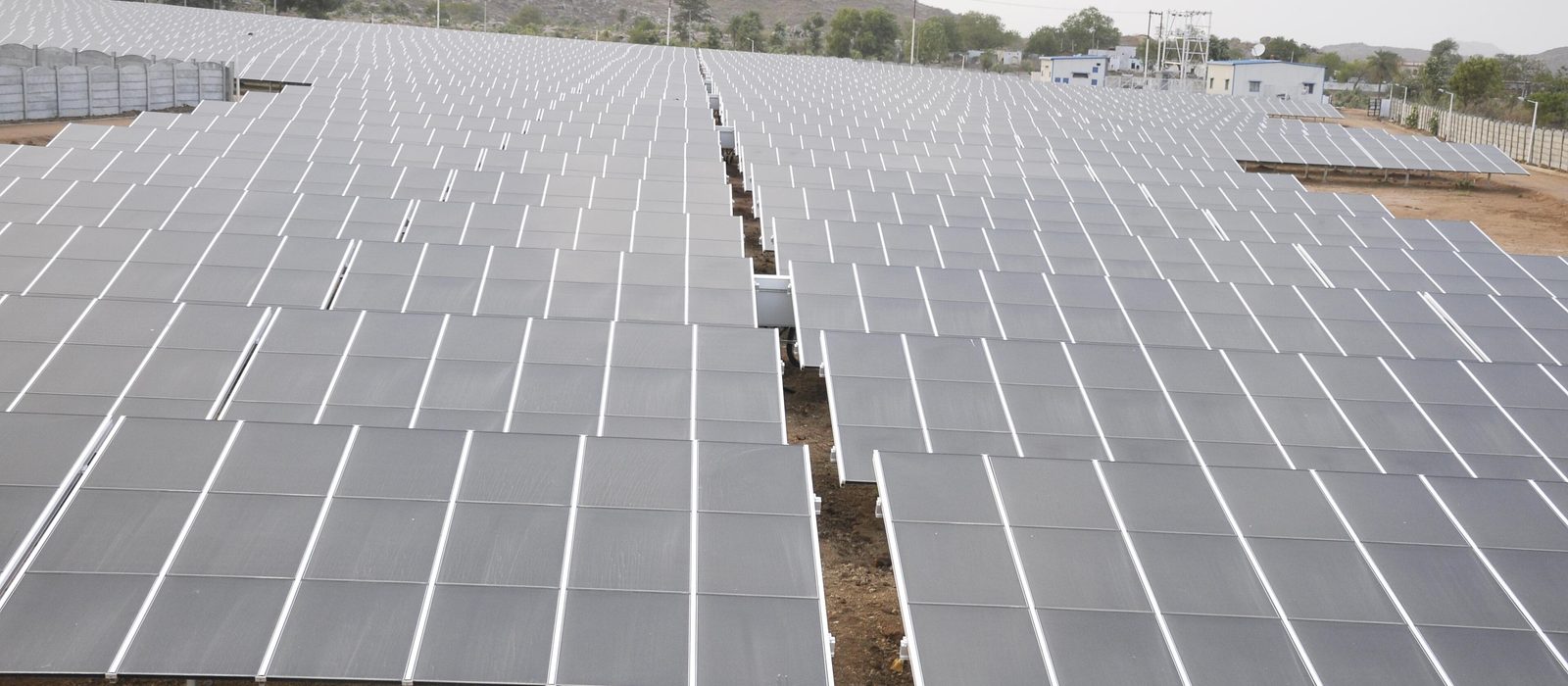
When one factory owns its own plant and uses most of the power, that is plain captive. "Group captive" is for when one factory does not want to pay for a whole plant. Several buyers, often unrelated factories, take shares in a plant company (usually called an SPV). Together they hold at least 26% and use at least 51% of its power. A developer usually builds and runs the plant and holds the rest of the shares. The power is carried over the TNEB grid to each buyer's HT service.
The 26% rule in practice
The 26% is counted for the buyers as a group, not per factory. Each buyer's shareholding is normally kept in line with its share of the plant's power. If your factory will take about a third of the power, you usually hold about a third of the buyers' 26%, not a third of the whole company.
From 13 March 2026, a buyer's captive use is capped at its share of the plant's ownership; use above that cap can attract the cross-subsidy surcharge and additional surcharge on the excess. The exact matching rules come from the 2026 amendment described below, so do not rely on a developer's pitch; ask the SPV's legal counsel to confirm them for your deal.
The 51% rule in practice
This is checked once a year, on actual metered use, not on what was promised in the agreement. What counts is the buyers' combined use against what the plant actually generated that financial year.
What group captive saves on your EB bill
Power bought through open access from a plant you do not own (third-party open access) pays two extra charges on top of the grid charges: the cross-subsidy surcharge and the additional surcharge. Group captive power that passes both tests is exempt from both.
- Cross-subsidy surcharge: ₹1.99 a unit for HT I (industrial) and ₹2.57 for HT III (commercial) under TNERC Tariff Order No. 6 of 2025, effective 1 July 2025. Under TNERC Orders No. 5 of 2019 and No. 9 of 2020, solar power bought third-party pays 70% of this, which is ₹1.39 for HT I and ₹1.80 for HT III. This is the charge group captive removes.
- Additional surcharge: TNERC orders set ₹0.54 a unit from 12 December 2024 to 31 March 2025 (M.P. No. 44 of 2024) and ₹0.10 a unit from 29 April to 30 September 2025 (M.P. No. 13 of 2025). As of 2 October 2026, no order covers power drawn after 30 September 2025. TNEB has petitioned TNERC for new rates for October 2025 onwards. The new rates are not decided, and an order could be applied backwards, so check the latest TNERC order before you budget.
Group captive does not remove the grid charges. Wheeling is ₹1.04 a unit for HT under the same tariff order; solar pays 50% of it, ₹0.52. Transmission charges, SLDC charges and line losses still apply too.
Illustrative default values — request a site-specific quotation.
Our Tamil Nadu open access guide adds up every charge by voltage.
What happens if the group misses 51%
This is the part most brochures skip. The tests are checked after the financial year ends. If the buyers together use less than 51% of the year's generation, the plant stops being a captive plant for that whole year, not just for the shortfall. All the power supplied that year is then treated like third-party supply, and the cross-subsidy surcharge and additional surcharge are billed back on all of it.
So 51% is a hard line, not a sliding scale. A group captive plant needs room to spare above 51%. Plan for the buyers' use to stay well above it even in a bad year, for example when one factory shuts a line or a member slows down. Plants can produce more than expected in a good solar year, which also pushes the share down if use does not keep up.
The 2026 change: one captive user across a company group
The Ministry of Power notified the Electricity (Amendment) Rules, 2026 on 13 March 2026, with some parts in force from 1 April 2026. A company, its holding company and the other subsidiaries of that holding company can now count as one captive user for both the 26% and 51% tests, with shares held directly or through group companies.
In practice, a business group with several factories in Tamil Nadu, say a holding company and two manufacturing subsidiaries, can share one group captive plant and meet the tests together, instead of each company qualifying on its own.
Why this matters more in Tamil Nadu now
TNERC's Green Energy Open Access Regulations 2025, notified 18 September 2025, took away banking for third-party open access. Third-party buyers must use solar power as it is made. That is a real problem for a factory running a night shift.
Group captive and captive buyers still get banking: 8% of the units are kept as a charge, banked units are settled each calendar month with no carry-forward, and they can only be used in the matching time slot (normal hours against normal hours, night against night; units banked in peak hours can be used in any slot). Units left unused at month-end are paid for at 75% of the renewable energy tariff.
Tamil Nadu's open access solar installations fell about 74% in January to March 2026 compared with the quarter before, and 58% compared with a year earlier (Mercom India). Mercom links the fall to tighter banking rules and higher landed costs for open access power.
When group captive is not worth it
Group captive is not right for every factory. It is a weak fit when:
- You need it fast. You need a shareholders' agreement and a power agreement with the plant company, checked by lawyers on both sides, plus open access approvals. It takes longer than a rooftop plant.
- You do not want to put money in. You must pay for your share of the plant company. It is far less than a whole plant, but it is not zero.
- Your load is small or seasonal. It works best with steady demand you can commit for many years. Finding other buyers whose load and plans match yours can take months.
- You do not want shared risk. If another member uses much less than planned and the group falls below 51%, your power can lose the exemption for that year even though your factory did nothing wrong.
For a smaller or seasonal load, a rooftop plant on your own HT service or zero-investment rooftop solar is simpler and carries none of this group risk.
Where Aran fits
Aran Tecnovation designs and makes solar hardware, including single-axis trackers and mounting structures that can go into a group captive plant. For open access, we compare group captive against third-party with every charge shown and connect factories with generators and legal partners. Aran never buys, sells or trades electricity and is not a party to any power agreement.
Not sure if group captive suits your factory?
Send us a recent HT bill. We will compare group captive with third-party open access and rooftop solar, with every charge shown.
See the Tamil Nadu open access guide