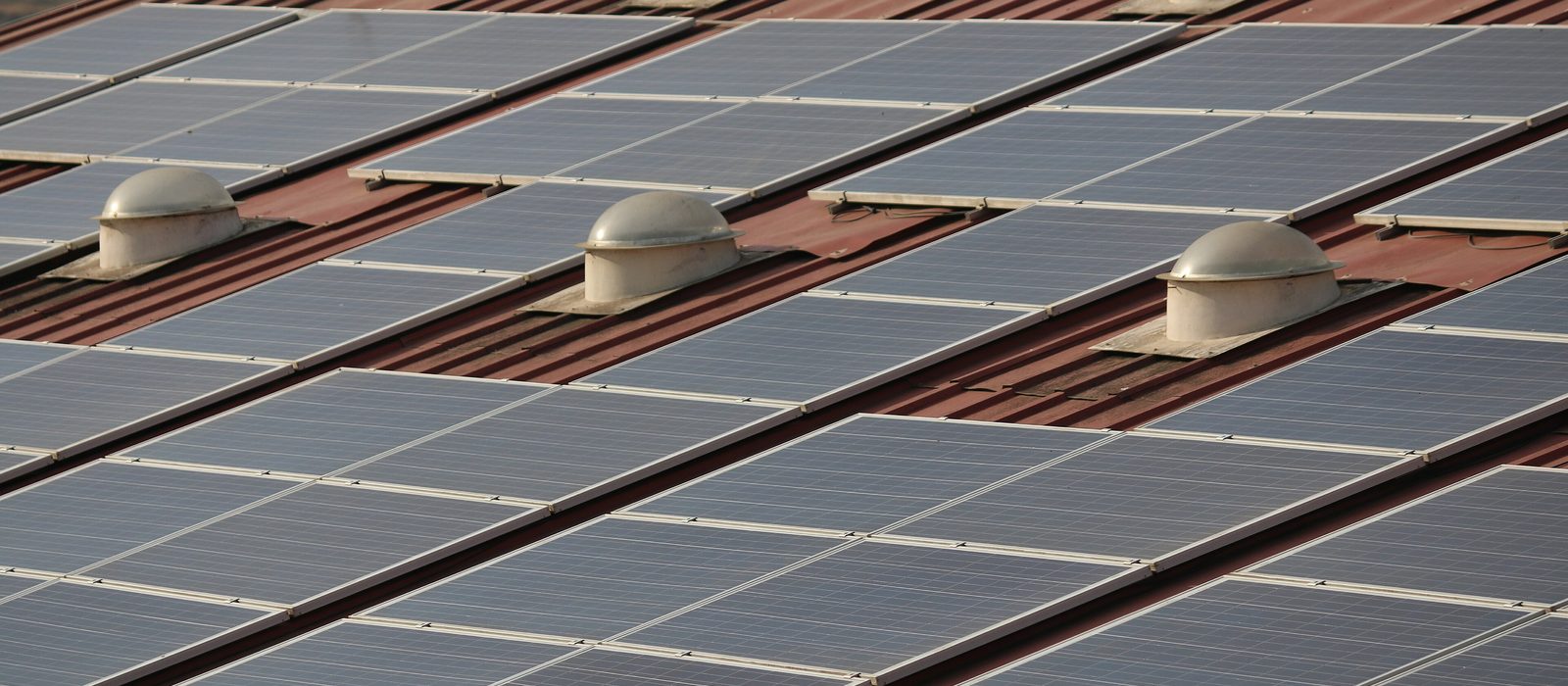
Every factory owner looking at rooftop solar asks the same first question: how many years before it pays for itself? There is no single answer. Two factories with the same roof and the same panels can get very different paybacks, because payback depends mostly on how the factory uses power, not on the solar plant.
In short
- Payback only applies when you buy the plant yourself (CAPEX); with zero-investment (OPEX) solar there is nothing to pay back
- Solar pays back fastest when the factory uses most of the power itself during the day, because exported units earn less than the HT rate you avoid
- Rooftop solar replaces energy units, but it does not reliably cut the TNEB demand charge
- A believable payback uses your tariff category, your hour-by-hour load and a roof survey, plus cleaning, servicing and yearly panel ageing
- Treat a round "3 years" with no workings as a sales figure and ask to see the calculation
This article is about CAPEX rooftop solar, where you pay for the plant and own it. If you are looking at a zero-investment OPEX (RESCO) deal instead, the payback question works differently. We explain why further down.
What decides your payback period
Six things move the number. Get one of them wrong and the payback stretches.
1. The EB rate you stop paying. Every unit your rooftop plant makes and your factory uses is a unit you do not buy from TNPDCL (the TNEB distribution company). Under TNERC Tariff Order No. 6 of 2025 (in force from 1 July 2025), the HT I industrial energy charge is ₹7.50 a unit, and 25% more in the 6–10 am and 6–10 pm peak hours. Solar makes most of its power in the middle of the day, at the normal rate, so most of what it saves you is the normal rate. The higher the rate you avoid, the faster the plant earns back its cost.
2. How much of your load runs in daylight. Solar makes power roughly from 9 am to 5 pm. A unit that runs mostly in the day uses most of its solar power itself and gets the best payback. A unit that runs heavy night shifts, or has a small daytime load, sends more power back to the grid. Under the TNEB rooftop scheme for HT factories (net feed-in), exported units are credited at a feed-in rate that is lower than the HT rate you avoid. So size the plant to your daytime load, not to your roof area or your contracted demand. Our guide to what TNEB allows on an HT factory roof explains the schemes and limits.
3. The demand charge does not go away. Your HT bill also has a demand charge (₹608 per kVA a month under the same order), billed on the higher of your highest 15-minute demand or 90% of your contracted demand. A passing cloud can drop solar output in minutes, so rooftop solar cannot be counted on to cut your highest demand. Do not let a payback calculation count demand-charge savings from solar alone.
4. Your roof. A strong shed roof with a simple layout and no shade is quicker and cheaper to build on. Shade from a nearby building, water standing on the roof, or a weak truss all need extra engineering, and that extra cost lengthens payback.
5. Cleaning, servicing and panel ageing. Dust on panels cuts output if they are never cleaned, and inverters need servicing. Insurance costs money every year too. Build all of this into the calculation. A frequent reason a payback turns out longer than quoted is that cleaning and servicing were left out. Panels also lose a little output every year: the median measured by the US National Renewable Energy Laboratory (NREL) across thousands of systems is about 0.5% a year, and hot Indian sites can lose more (why panels age faster in Indian heat). A realistic calculation uses falling yearly generation, not the same number for 25 years.
6. The tax benefit. A company with taxable profit can claim faster (accelerated) depreciation on a solar plant under income tax rules, at a higher rate than ordinary plant and machinery. This brings a tax saving into the early years and shortens payback for a profitable company. It does nothing for a unit with no taxable profit. The rate and conditions (such as how many days the plant is used in its first year) can change, so confirm the current position with your chartered accountant before counting on it.
One more open point: TNPDCL has tried to bill a network charge on rooftop solar generation, and the Madras High Court set those demands aside in December 2024. The position today is not settled, so ask anyone quoting you a payback whether they have allowed for it.
So how many years?
Installer guides often quote very short paybacks for factory rooftop solar. Treat these as sales figures, not promises. They are written by people selling plants, often for states with higher tariffs, and many assume every unit is used on site.
Within Tamil Nadu, factories with a strong daytime load and a good roof pay back faster. Units with a small daytime load, heavy night shifts, or a roof that needs strengthening take longer, sometimes much longer.
Illustrative default values — request a site-specific quotation. The only real number comes from your own tariff category, your hour-by-hour load and a roof survey.
Why OPEX (zero-investment) has no payback period
Payback is a CAPEX idea: you spend money first, then count the years until the savings equal what you spent. Under Aran's zero-investment OPEX model, you spend nothing upfront. Aran builds, owns and runs the solar plant on your roof, and you pay an agreed rate for each unit the plant supplies, usually below your TNEB rate.
With nothing spent, there is nothing to earn back. The saving starts from the first bill. The trade-off is different: you sign a long-term agreement, you do not own the plant unless the agreement says it transfers to you, and the saving per unit is smaller than an owner gets once the plant has paid for itself. Which model suits you depends on whether your money earns more elsewhere in the business, and how long you are sure of staying at the site.
When not to rush into rooftop solar
Rooftop solar pays back slowly, or not at all, in some situations. Check these before you spend capital:
- Mostly night shifts or a small daytime load. A large plant would export much of its output at the lower feed-in credit. A smaller plant, sized to your daytime load, may make more sense than filling the roof.
- A roof with a short life left, heavy shade or a weak structure. If the roof needs replacing within the plant's life, or shade cuts output for much of the day, fix or rule out the roof problem first.
- A site you may leave within a few years. A rooftop plant you own is tied to that building. If the horizon is short, take the OPEX route or wait.
- No taxable profit. Without the depreciation benefit, the same plant takes longer to pay back. Run the numbers both ways.
- A large HT load on a small roof. For bigger loads, buying solar power through open access in Tamil Nadu, including group captive, can cost less per unit than a rooftop-only plan. Many factories use both.
What to ask before you trust a payback number
A believable payback needs three things a general guide cannot give you: your tariff category and billed rate, your hour-by-hour load, and a proper roof survey. Ask anyone quoting you a payback to show all three, plus the cleaning and servicing cost and the yearly panel ageing they used. If a quote shows a round number like "3 years" with no workings, ask to see the calculation.
If you would rather not make the capital decision at all, our zero-investment OPEX model removes the payback question.
Want a payback number you can trust?
Send us 12 months of HT bills and a few roof photos. We show every assumption behind the number, or show you the zero-investment option instead.
See zero-investment rooftop solar