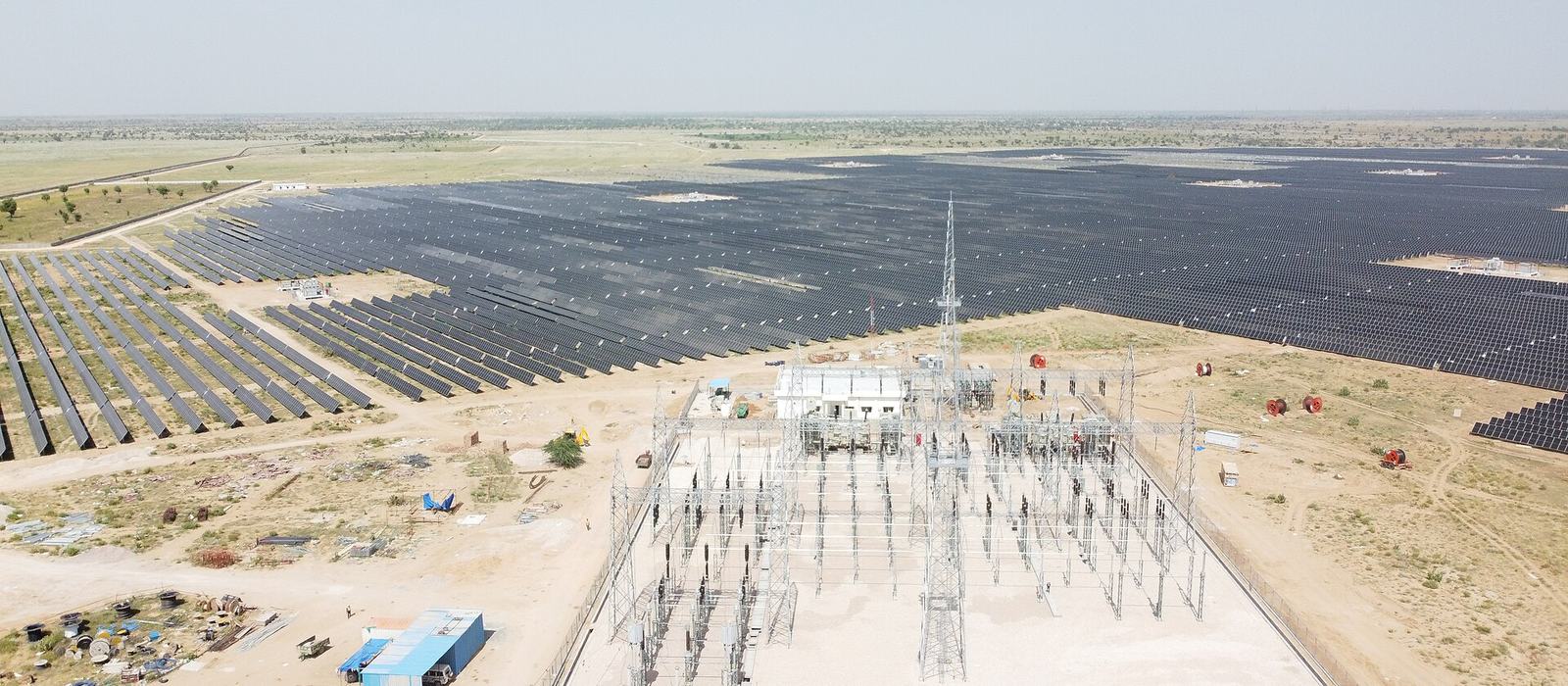
Every solar module ships with a warranty that promises steady performance for 25 years. It's the number that underpins every project's financial model. But in India's heat and humidity, the reality on the ground is often harsher than the datasheet — and the gap can quietly cost you years of generation you were counting on.
If you own or are planning a solar plant, this is one of the most important things to understand before you commit capital. The panels are usually the single largest cost in the project, and how fast they age determines whether your investment delivers the returns you modelled — or falls short.
What the Datasheet Actually Promises
A typical solar panel comes with a linear performance warranty: it might guarantee, say, 90% of rated output after 10 years and around 80% after 25 years. That translates to a gentle, predictable decline of well under 1% per year. On paper, it's a clean, bankable number.
The catch is in how that number is measured. These figures come from standard test conditions — controlled laboratory environments at a fixed temperature, usually 25°C. They are not measured in a field in India where the panel bakes at 60°C or more on a summer afternoon.
Why Heat and Humidity Break the Promise
Solar panels are sensitive to two things that Indian conditions supply in abundance: heat and humidity.
Heat accelerates degradation
Every material inside a solar module ages faster when it runs hot. Prolonged high temperatures accelerate the chemical and physical wear on the cells, the encapsulant, and the electrical connections. A panel that consistently operates 30°C hotter than lab conditions is simply ageing on a faster clock than the datasheet assumes.
Humidity attacks from the edges
In humid regions, moisture slowly works its way into the panel's layers over the years, contributing to failure modes that reduce output. Combined with heat, the effect compounds — and much of India delivers both, together, for months at a time.
The practical result is that many plants in hot, humid parts of India see their panels degrade meaningfully faster than the warranty curve — with effective, economically useful life sometimes falling below 15 years rather than the full 25. That's a decade of generation missing from the financial model the investment was justified on.
Why This Rarely Shows Up as a Warranty Claim
Manufacturers' warranties are real, but claiming against them for gradual degradation is notoriously difficult — it requires precise measurement, controlled conditions, and often years of documentation. In practice, most plant owners simply absorb the lost generation quietly. The financial damage is real, but invisible on any single day.
The One Factor You Can Actually Control: Temperature
You can't change India's climate, and you can't rewrite the datasheet. But you can control how hot your panels get in operation — and that is one of the biggest levers on how fast they age.
The key is airflow. A panel mounted low and flat, close to the ground or a rooftop, traps heat beneath it. Hot air has nowhere to go, and the panel runs hotter for longer. A panel mounted on an elevated structure with open space beneath it gets constant airflow that carries heat away — running cooler through the day.
This is one of the underappreciated advantages of a single-axis tracker over a fixed mount. The tracker's elevated, open structure allows air to move freely beneath the panels, keeping operating temperatures lower than a tightly-packed fixed installation. Cooler panels degrade more slowly — which means your generation stays closer to the design curve for more of the project's life.
What lower operating temperature buys you
- Slower degradation, keeping output closer to the datasheet curve for longer
- More total generation across the plant's life — directly protecting your returns
- A longer economically useful life before panels need replacing
- Better hot-weather efficiency, since panels also lose instantaneous output when they overheat
What This Means for Your Investment
When you evaluate a solar project, don't take the 25-year warranty at face value for Indian conditions. Ask the harder question: how hot will these panels actually run, and what will that do to their real-world life? A plant designed to keep panels cool — through elevation, airflow, and smart mounting — protects the single most expensive component you're buying.
The difference between a plant that keeps its panels cool and one that lets them cook is not visible on day one. But across 25 years, it's the difference between hitting your projected returns and quietly falling years short.
Soiling is the part of this you can actually do something about week to week — see automated panel cleaning for how we handle it.
Worried about panel life on your site?
Our engineers can assess how your local climate will affect panel degradation — and how mounting and airflow choices protect your generation across 25 years.
See automated panel cleaning