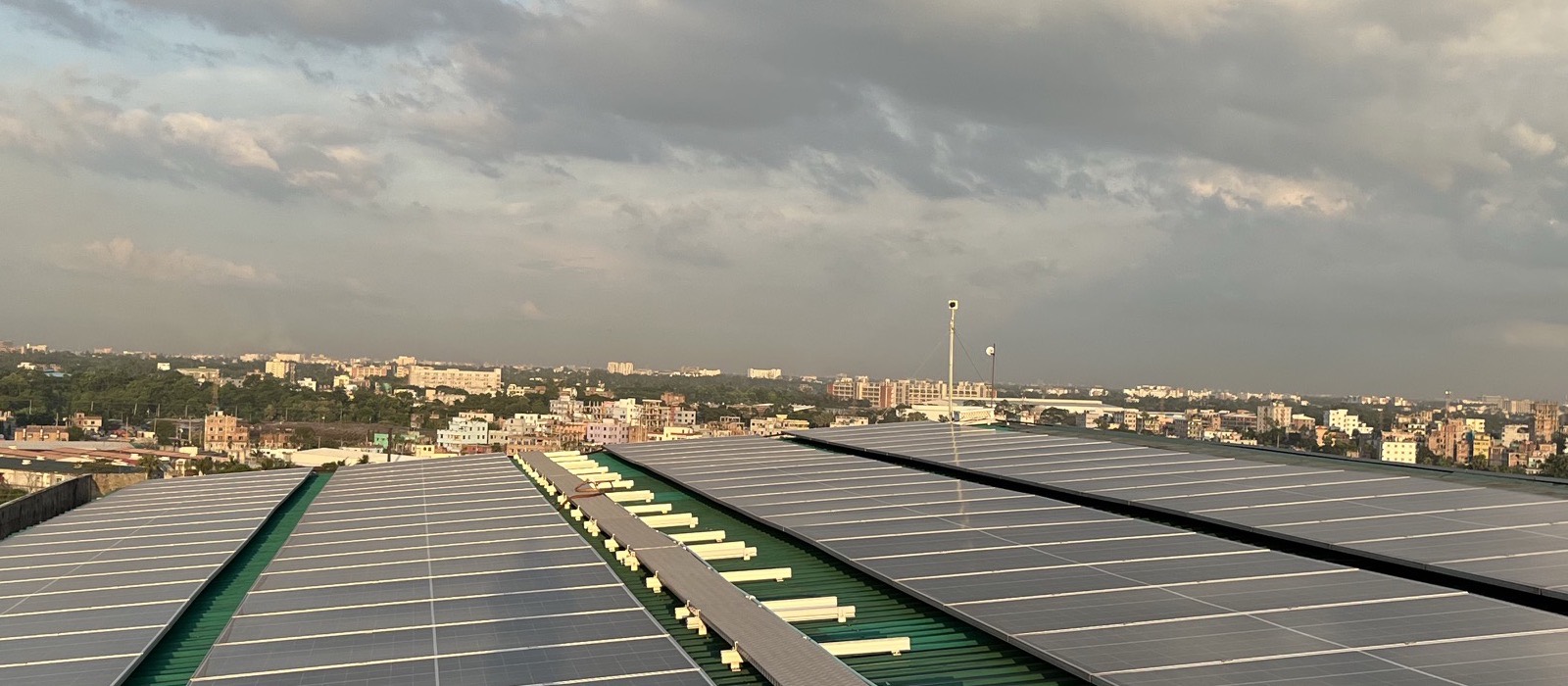
Someone offers to put solar panels on your factory roof, charge you less per unit than the grid does, and ask you for nothing upfront. No capital, no loan, no equity. You sign a contract and the saving starts from the first bill. If your first reaction is "what's the catch?" — that is the right question. There is one. It is not hidden, and once you can see it clearly you can decide in an afternoon whether the deal is for you.
This is the OPEX model, sometimes called RESCO: a developer builds, owns and runs a plant on your roof, and you buy the power it makes at an agreed rate. Open access and group captive are different routes with different trade-offs; that comparison is here. This article stays inside the zero-investment model and answers the three questions people actually lie awake over.
1. Who owns the plant, and what happens when the contract ends?
The developer owns it. Not you. It sits on your roof, but it belongs to whoever paid for it. You are buying the electricity it makes, not the equipment. That is the whole basis of the deal, and it is the first thing to be clear-eyed about.
The agreement that governs this is a power purchase agreement, or PPA, and they run long — commonly 15 to 25 years. That length is not the developer being greedy; it is how a plant that cost them a great deal of money gets paid back at a per-unit price low enough to be worth your while. A short term would need a high tariff, and then there would be no saving to talk about.
What happens at the end is the part to read twice. There are usually three possibilities, and which one you get depends entirely on what is written down:
- The plant transfers to you, typically for a nominal sum or at a fair value set by a formula in the contract. This is the most common arrangement and the best one for you.
- The contract renews at a renegotiated rate.
- The developer removes the plant and makes good the roof.
Ask which of these applies, and ask to see the clause. A developer who is vague about the end of the term is telling you something.
2. What happens if it makes less power than promised?
This is where the model is genuinely on your side, if the contract is written properly. In a plant you own, a bad year is your bad year. In an OPEX plant, generation risk sits with the developer — because they only earn when the plant produces, they are the ones with every reason to keep it producing.
A well-drafted agreement makes this explicit with a performance guarantee: a minimum the plant will deliver, usually expressed as a performance ratio, with the developer compensating you if it falls short. Common practice in India is a guaranteed performance ratio somewhere in the mid-to-high seventies of percent. Below that, they pay.
Two things to check. First, that the guarantee exists at all — not every offer includes one, and an offer without one has quietly moved the risk back to you. Second, what happens on your side if you use less power than expected: many agreements carry a minimum offtake, so that if your factory runs at half capacity for a year you may still owe for units you did not use. That is not unfair — the plant was built for your load — but it should be a number you have seen, not a surprise.
3. What does it cost me if I sell the building, shut down, or move?
This is the question people are most afraid to ask, so here it is plainly: there is normally a cost, and it can be substantial.
You have signed a long contract to buy power. If you walk away in year six, the developer has a plant on a roof that no longer has a customer. The contract will say what you owe, and it usually takes one of two forms:
- A buyout, where you purchase the plant at a value that falls over time — often only available after a lock-in period of several years.
- A termination payment, typically calculated from the value of the remaining payments the developer was expecting.
Either way, the exit is not free, and the earlier you leave the more it costs. The way to protect yourself is not to hope it never happens — it is to read the exit clause before you sign and make sure the number in it is one you could live with. If you are selling the building, the contract can often transfer to the buyer; a plant that lowers the power bill is usually a selling point, not a problem. Ask whether assignment is allowed.
What you are actually giving up
It would be dishonest to leave this out. The zero-investment model trades three things for its zero:
- Upside. If you had bought the plant outright, after it paid for itself every unit would be nearly free. Under OPEX you keep paying a rate for the whole term. The saving is real from day one, but over 25 years it is smaller than ownership would eventually have delivered.
- A long commitment. You are agreeing to buy power from this roof for a long time. That suits a business that expects to be where it is; it suits a business that might move in five years much less.
- Roof access. The developer needs to get to their plant — for cleaning, repairs, monitoring. That is normal and it is in the contract, but it is a right over your building that you are granting.
In return you get a lower bill without spending capital, and every operational headache — cleaning, inverters, insurance, performance — becomes someone else's. For most growing businesses whose capital earns more inside the business than on the roof, that is a good trade. It is not a free one.
When this is not worth doing
Walk away, or at least think hard, if any of these describe you:
- Your load is mostly at night. Solar makes power in daylight. A plant running a night shift still buys grid power after dark at full price. If most of your consumption is after sunset, rooftop solar under any model will disappoint.
- Your lease is short, or the building is likely to be sold. A 20-year contract on a 3-year lease is a problem waiting to happen. Get the landlord's written consent and a lease long enough to matter, or look at open access instead, which does not depend on the building.
- The roof needs replacing. Putting a 25-year plant on a roof sheet that is due for renewal in five is an expensive way to postpone a repair. Fix the roof first.
- Your tariff is already very low. The whole model lives in the gap between the grid rate and the solar rate. If that gap is small, so is the reason to sign.
The five clauses to read before anything else
Term length. End-of-term handover. Performance guarantee. Minimum offtake. Exit and assignment. If a developer will show you those five up front and plainly, the rest of the contract is probably fine. If they will not, that is your answer.
Illustrative default values — request a site-specific quotation. Contract terms vary; the ones described here are common practice, not a description of any particular agreement.
The honest summary
The catch in zero-investment solar is not that it is a trick. It is that it is a long contract, and long contracts reward the people who read them. Who owns the plant, what the guarantee covers, what leaving costs — those three answers are the whole decision. Get them in writing, and the model does exactly what it says: a lower power bill, no capital, and someone else's problem when the inverter fails.
Want the three answers for your own roof?
We deliver zero-investment rooftop solar and we will show you the term, the guarantee and the exit clause before you ask. See how the zero-investment model works, or send us one recent electricity bill and we will tell you honestly whether it fits.
See the zero-investment model