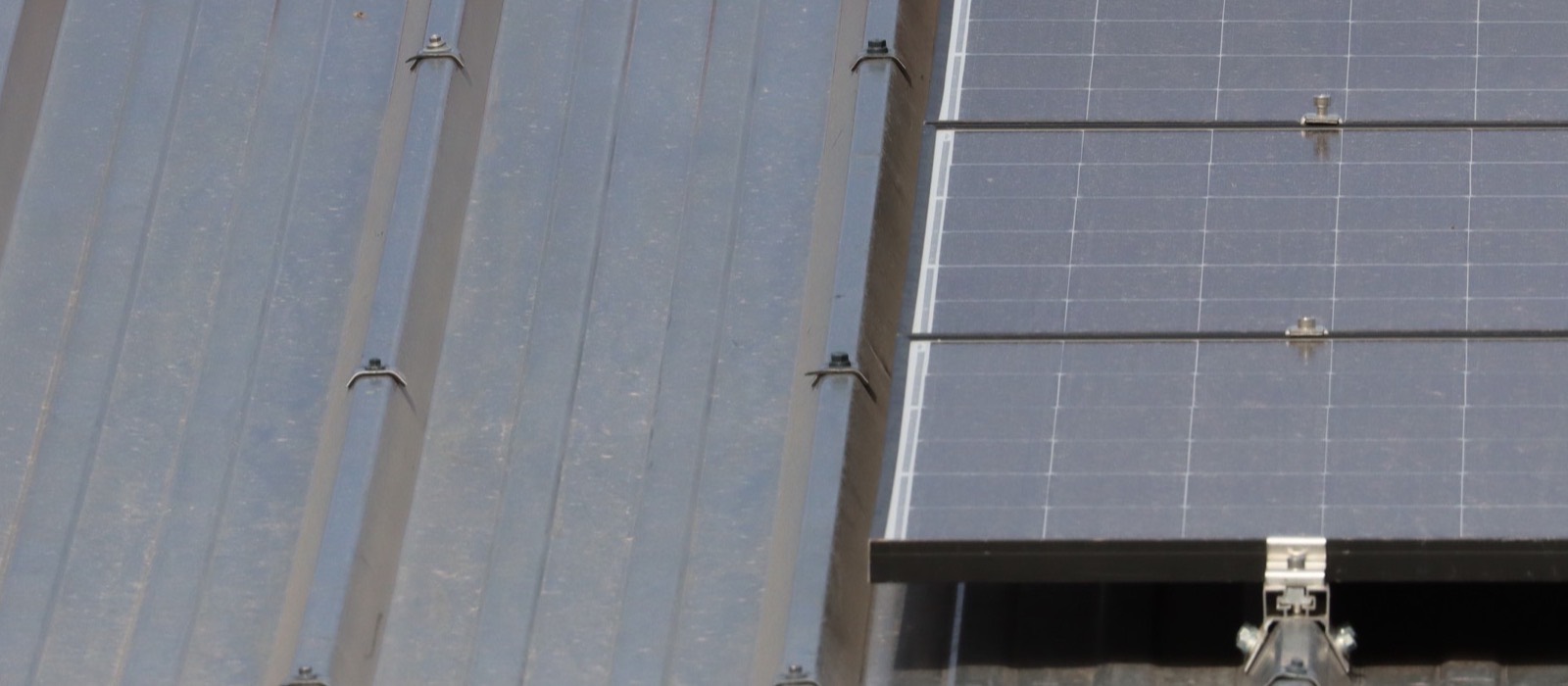
On 5 August 2026, the Tamil Nadu government announced a ₹22,000 state subsidy for home rooftop solar, on top of the ₹78,000 already available from the central PM Surya Ghar scheme. For a 3 kW system that takes total support to about ₹1,00,000. Here is what it actually covers, who can claim it, and the catch most people will not tell you about.
Accurate as of 11 August 2026
This was announced in the Revised Budget 2026-27 and is to be implemented in convergence with PM Surya Ghar. Scheme rules change — check the official portal and your electricity board before you commit money. We date this page and review it; if you are reading it much later, treat the numbers as a starting point, not gospel.
What you actually get
The central subsidy is paid in slabs: ₹30,000 per kW for the first 2 kW, plus ₹18,000 for the third kW. So 1 kW gets ₹30,000, 2 kW gets ₹60,000, and 3 kW gets ₹78,000 — and ₹78,000 is a hard cap. A 5 kW or a 10 kW system still gets ₹78,000. Tamil Nadu's new ₹22,000 sits on top of that, so a 3 kW home system is supported to roughly ₹1 lakh.
The part that decides whether you get it at all
This matters more than the amount: the subsidy only flows if your installation is done by an empanelled vendor, registered through the national PM Surya Ghar portal. If you hire an installer who is not empanelled — even a good one, even a cheaper one — the money does not come. There is no appeal for this.
The money is also paid by direct transfer into your own bank account, not to the installer, and the account has to be Aadhaar-seeded. So you pay the full amount first and the subsidy arrives afterwards. Plan your cash for that gap.
The ₹50 crore catch nobody mentions
The state has allocated ₹50 crore to this top-up. At ₹22,000 per home, that funds roughly 22,000 to 23,000 households across all of Tamil Nadu. For context, the state has around 85,000 rooftop systems installed so far, and India as a whole passed 50 lakh homes in early August 2026.
So this is not an open-ended entitlement. It is a fixed pot, and in practice these schemes tend to run first-come, first-served until the allocation is used. If the ₹22,000 is the thing that makes your decision work, move early rather than waiting to see how it goes.
How to apply, in order
- Register on the national PM Surya Ghar portal with your electricity consumer number and mobile.
- Pick an empanelled vendor from the portal list for your distribution area. Verify their empanelment on the portal itself, not from their brochure.
- Apply for feasibility approval, then get the system installed.
- Apply for net metering and the inspection. The meter and inspection step is usually the slowest part — allow for it.
- Submit your bank details and claim. The subsidy is transferred to your account.
What ₹1 lakh covers — and what it does not
Illustrative default values — request a site-specific quotation. What is included varies by vendor; get it in writing.
Is a sun-tracker worth it on a home roof? Honestly, usually not
We make solar trackers, so you might expect us to say yes. We will not. On a home rooftop, a tracker adds moving parts, wind load and roof-fixing complexity, and the flat ₹78,000 subsidy does not reward the extra generation — the cap is on the money, not on the output. For most homes, a well-installed fixed system from an empanelled vendor is the right answer.
Where a tracker genuinely earns its keep is ground mount, agricultural pumps, open land and commercial roofs — places where more generation actually converts into more money. If that is your situation, the tracker page is the honest read.
Straight answer: can Aran install my home system?
No. We are a solar engineering company — we design and build trackers, mounting structures and cleaning systems. We are not a residential rooftop installer, and we are not going to take your subsidy application. If you want, tell us where you are and we will point you toward an empanelled installer in your area. That referral costs you nothing.
If you own a factory, commercial building or land as well as a home, that is a different conversation and one we can genuinely help with — see zero-investment solar or buying cheaper power.
Common questions
How much subsidy do I get for a 3 kW home solar system in Tamil Nadu?
About ₹1,00,000 in total — ₹78,000 from the central PM Surya Ghar scheme plus the ₹22,000 Tamil Nadu top-up announced on 5 August 2026. The central portion is ₹30,000 per kW for the first 2 kW plus ₹18,000 for the third kW, capped at ₹78,000.
Will a bigger system get me more subsidy?
No. The central subsidy is capped at ₹78,000 regardless of system size, so a 5 kW or 10 kW system receives the same ₹78,000 as a 3 kW one. A bigger system can still make sense for your own consumption, but not for the subsidy.
Can any installer get me the subsidy?
No. The subsidy only flows when the installation is done by a vendor empanelled through the national PM Surya Ghar portal. Verify empanelment on the portal itself before you pay anyone.
When is the subsidy paid?
After installation, inspection and net metering, by direct transfer into your own Aadhaar-seeded bank account — not to the installer. You fund the system first and the subsidy follows, so plan for that gap.
Is the ₹22,000 state subsidy limited?
Yes. Tamil Nadu allocated ₹50 crore, which at ₹22,000 per home funds roughly 22,000 to 23,000 households statewide. It is a fixed pot rather than an open entitlement, so applying early matters.
Does Aran Tecnovation install home rooftop solar?
No. Aran is a solar engineering company that designs trackers, mounting structures and automated cleaning. We do not install residential rooftop systems and do not handle subsidy applications. We are happy to point you to an empanelled installer in your area.
Own a factory or commercial building as well?
That is where we can genuinely help. Send your last few electricity bills and we will come back with your real cost per unit, and whether zero-investment solar or open access saves you more. No obligation.
Talk to our team