Short answer: probably not, and not in the way most articles about this scheme still describe. The window for new projects under the current scheme has effectively closed, and a replacement is being written. If you own land and someone has told you to apply today, this page explains what has actually changed.
What Component A was built to do
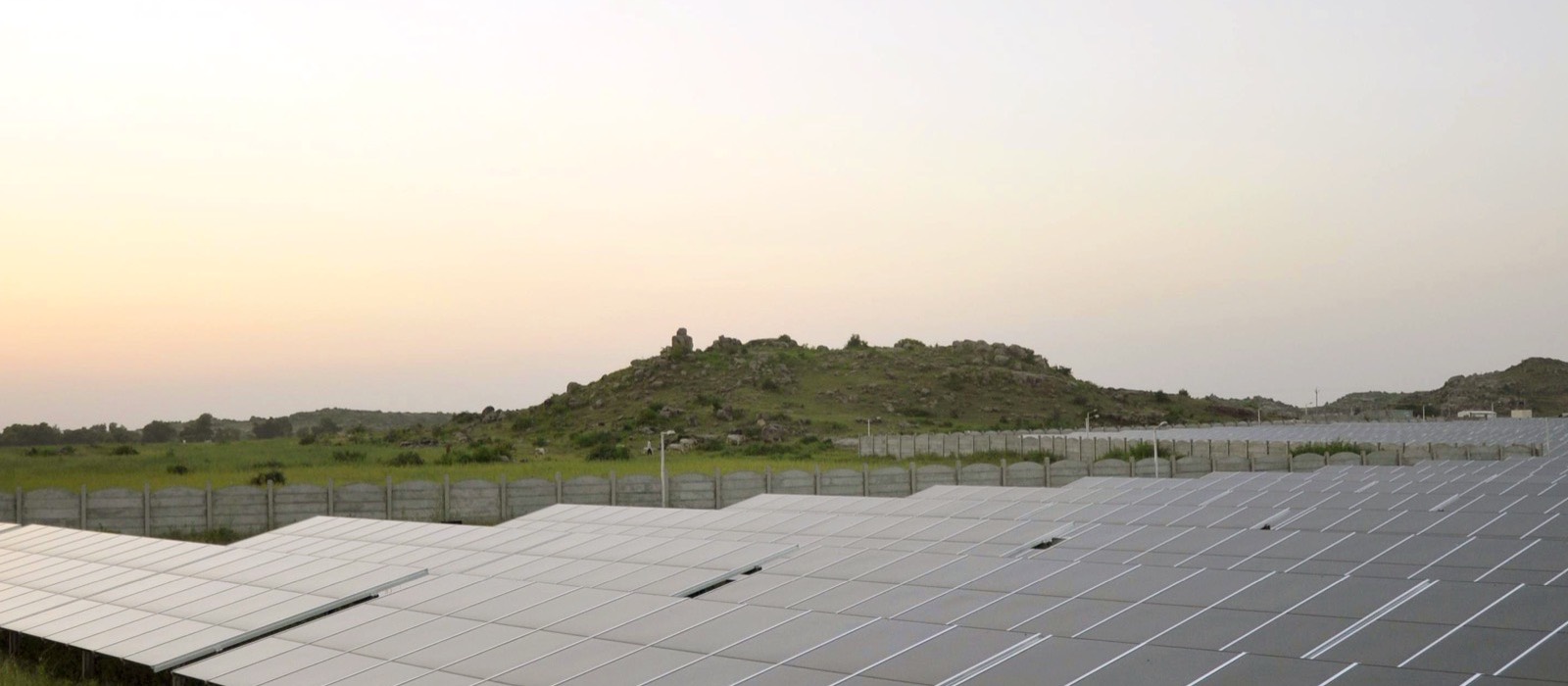
PM-KUSUM has three parts. Component A is the one for land. It lets a landowner or a developer put up a grid-connected solar plant of 500 kW to 2 MW and sell the electricity to the local distribution company.
The people allowed to build one are broad: individual farmers, groups of farmers, cooperatives, panchayats, Farmer Producer Organisations and Water User Associations — or a developer building on land leased from them.
The price per unit is not negotiated with the DISCOM. It is a feed-in tariff set by the State Electricity Regulatory Commission, and the DISCOM receives its own incentive from the centre for buying that power, which is what makes it willing to sign.
Two details matter more than people expect. First, Component A carries no capital subsidy to you. You will read otherwise on a lot of websites — the widely-quoted 30% central plus 30% state figure belongs to Component B, the small pump scheme, and gets copied across by mistake. Component A is financed by you, and the support comes through the tariff and the incentive paid to the DISCOM.
Second, the land does not have to be waste. Barren, fallow, pasture and marshy land is the obvious fit, but panels raised on stilts, with enough clearance and row spacing to keep farming underneath, are allowed. That is agrivoltaics, and it is the part of this scheme with the most future in it.
What actually changed in March 2026
The scheme was due to run until 31 March 2026. At the end of March 2026 the Ministry of New and Renewable Energy extended the timelines, and the new dates are different for each component — which is worth getting right, because a lot of coverage rolls them into one date.
- Component A and the feeder-level part of Component C: financial closure by 30 November 2026 (first set at 30 September 2026, then moved by two months), commissioning by 31 March 2027.
- Component B and individual-pump Component C: commissioning by 30 September 2026 — six months before the Component A date. That date has now passed, and we have not seen a new one.
The reason given was that developers could not get their financing closed in time, with banks lending cautiously. The same problem led MNRE to give Component A and C projects two more months for financial closure, to 30 November 2026. The commissioning date did not move, and MNRE has said there will be no further extension beyond 31 March 2027.
This is the part almost every article gets wrong, so read it carefully:
The extension is not a new application window
It applies only to projects whose power purchase agreement or notice to proceed was already issued on or before 31 December 2025. If you do not have a signed PPA from before that date, the extension does nothing for you. It gives the existing pipeline more time to finish building. It does not open the door again.
So a landowner starting from nothing today is not late for a deadline. There is no longer a live central window to be late for.
Updated 3 October 2026 (financial-closure date moved to 30 November 2026). Scheme rules in India change often — check the current position with your state nodal agency before acting on anything here.
What is coming instead
A successor is being prepared, referred to as PM-KUSUM 2.0. As of today it has not been formally notified, which means the detailed guidelines — capacity targets by state, benchmark costs, how the money works — are not published yet. Anyone telling you the rules of 2.0 with confidence is guessing.
What has been said publicly is worth knowing. On 10 March 2026, at the 4th National Agro-RE Summit in Delhi, the Union Minister for New and Renewable Energy announced that PM-KUSUM 2.0 will carry a dedicated 10 GW agrivoltaics component — solar generation on land that stays in cultivation. The budget allocation for KUSUM was also raised sharply in the 2026-27 Union Budget.
If that holds, it changes the shape of this opportunity. The current scheme treats farmland-with-stilts as a permitted variation. The next one appears to treat it as a target in its own right.
So what should you do with your land now?
Waiting is not the same as doing nothing. The projects that move fastest when a scheme opens are the ones where the boring work is already finished. If your land is a genuine candidate, these are worth doing now rather than in the rush:
- Confirm what your land legally is. Classification, clear title and undisputed ownership decide eligibility before anything technical does.
- Find your nearest substation and ask what capacity it can take. Distance to the connection point and available headroom shape the whole project. A perfect site with nowhere to send the power is not a site.
- Talk to your state nodal agency, not to a website. Each state administers this differently. In Tamil Nadu the old TEDA functions were folded into Tamil Nadu Green Energy Corporation along with TANGEDCO's renewable wing in 2024, so material naming TEDA is out of date.
- Decide honestly whether you are building or leasing. Building means raising capital and carrying the project. Leasing your land to a developer means less money and far less risk. Both are legitimate; pretending the first is easy is not.
When this is not for you
We would rather say this now than after you have spent money on a report:
- Your plot cannot hold 500 kW. The scheme is written for 500 kW to 2 MW. Smaller plants may be allowed in specific cases on techno-commercial grounds — usually where the substation cannot absorb more — but that is a case you have to make to your state nodal agency, not a right. On a small parcel, assume it is a hard sell unless the agency tells you otherwise.
- The nearest substation is far away or already full. Evacuation cost can quietly exceed the value of the project.
- You cannot fund a capital project and do not want a lease. With no capital subsidy in Component A, this is a real investment over many years, not a subsidised purchase.
- The land is your best cropping land and stilts will not work on it. Stilt mounting suits some crops and machinery and not others. If it does not suit yours, keep farming it.
- You need income this year. Approval, financing, construction and commissioning take a long time even when everything goes right.
Where the mounting choice comes in
At 500 kW to 2 MW, the structure under the panels stops being a detail. This is the scale where a fixed-tilt frame and a single-axis tracker are a genuine decision rather than a rounding error, because you are selling every unit you generate at a set tariff for a long time.
A tracker follows the sun and can lift generation by up to 25%. We deliberately quote a lower figure than much of the market, and we have written separately about what a tracker actually costs to own — the honest answer being that the hardware is the small part and keeping it moving is the rest.
For land that stays in cultivation, the stilt structure is doing two jobs at once: holding the array and leaving working room underneath for people, water and machinery. That is a different design problem from a plain ground mount, and it is worth treating as one.
Illustrative default values — request a site-specific quotation. We do not publish plant prices, because a number given without seeing your land, your substation distance and your state's tariff order is a guess.
The honest summary
Where this stands today
The current PM-KUSUM Component A window is closed to new projects; the March 2027 extension only covers projects already contracted before 2026. A successor with a dedicated agrivoltaics component has been announced but not notified. If you own suitable land, the useful work right now is title, classification and substation capacity — so that you are ready rather than starting from zero when the new rules appear.
If you want a second opinion on whether your land is a realistic candidate, we will tell you plainly if it is not.
Have land you are wondering about?
Tell us roughly where it is, how big it is, and how far the nearest substation is. We will give you a straight view on whether it is worth pursuing — including if the answer is no.
Selling power from your land