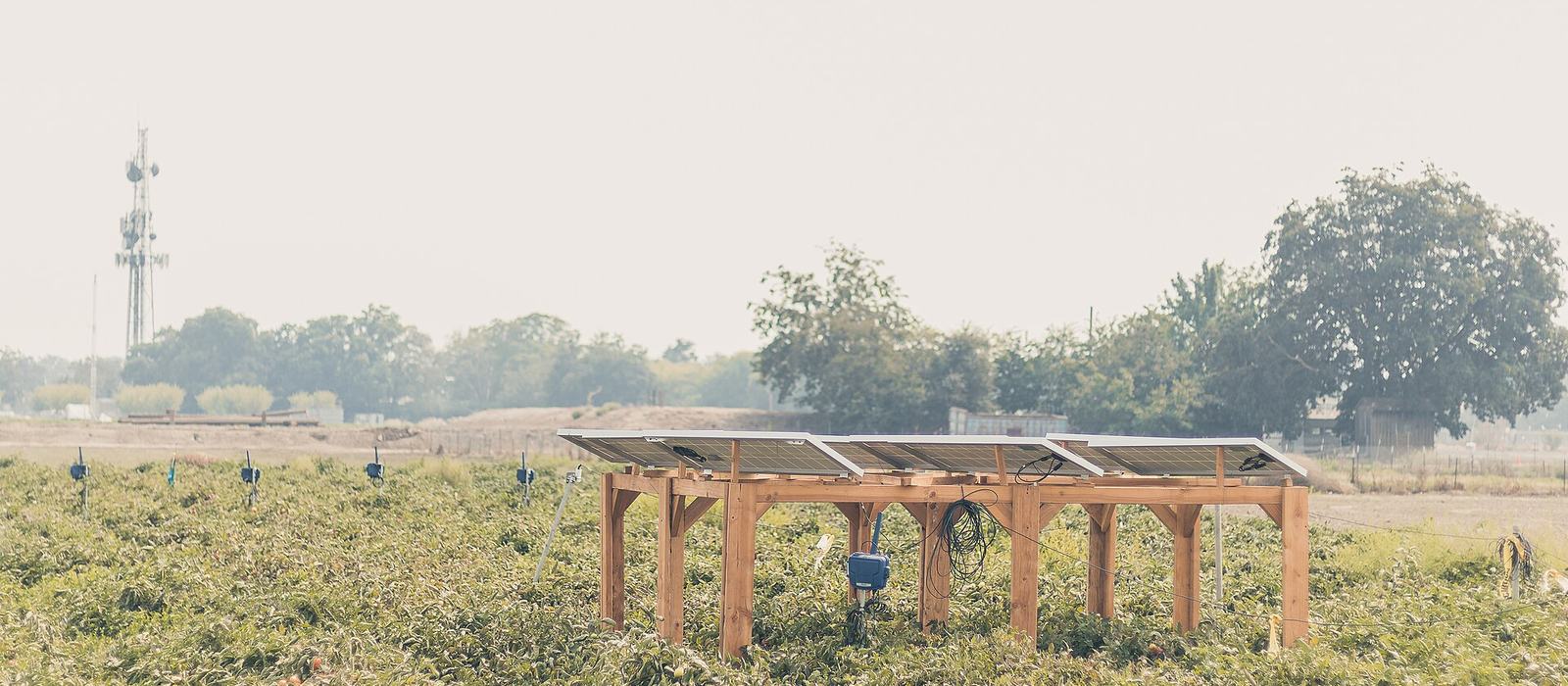
Most solar plants sit low and tightly packed, and the land under them produces nothing. Agrivoltaics changes that: raise the structure, and the same plot can grow crops, hold a fish pond or shelter cattle while the panels make power above. Here is how it actually works in India — and where it does not.
One piece of land, earning twice
Most solar plants sit low and tightly packed — the land under them is dead space. The Aran tracker is raised, with airflow underneath, which leaves real room to farm below. So the same plot earns from both the power above and the farming below, instead of just one.
How it works
- The Aran tracker is mounted high, so there's usable space under the panels.
- The panels give partial shade — good for many crops and vegetables in India's heat.
- The cleaning system's reused water can feed a fish pond or irrigate below.
- You harvest power above and crops, fish or cattle below — two incomes, one plot.
Illustrative default values — request a site-specific quotation.
What the space below can do
Shade-friendly crops
Grow vegetables and crops that do well with partial shade and cooler soil.
Fish ponds
Fed by the cleaning system's reused water — another harvest from the same plot.
Cattle shelter
Shade and shelter for cattle, with grazing on the same land.
Higher land income
Two incomes from one plot — usually far more than a solar-only fixed plant.
Water reused
The closed-loop cleaning water can irrigate below or top up a pond.
Cooler for crops
Partial shade cuts heat stress on plants during India's hottest months.
Fixed solar-only vs Aran agrivoltaics
Illustrative default values — request a site-specific quotation.
Honest note
What grows best depends on your climate, soil and water. Tell us about your land and what you'd like to farm, and we'll lay out a realistic plan for both the power and the farming — and what's ready for your site today.
Built on the raised Aran tracker
Agrivoltaics works because the Aran solar tracker is raised and leaves room to farm — and its built-in cleaning system reuses water you can put back into the land. See the solar tracker → · See automated cleaning →
Common questions
What is agrivoltaics?
Agrivoltaics means using the same land for both farming and solar power. Aran's raised solar tracker leaves usable space underneath, so you can grow shade-friendly crops, run a fish pond or shelter cattle below while the panels make power above.
Can I really farm under a solar tracker?
Yes — because the Aran tracker is raised, there's room to farm underneath. The shade suits many crops and vegetables, and the reused water from the cleaning system can feed a fish pond. A normal fixed plant sits too low and packed to allow real farming under it.
How does farming plus solar earn more?
You earn from the power the plant makes and from the crops, fish or cattle on the same land — two incomes from one plot instead of one. Total land income is usually much higher than a solar-only fixed plant. Figures are illustrative; ask for a site-specific estimate.
What can I grow or raise under the panels?
Shade-friendly crops and vegetables, fish ponds fed by the cleaning system's reused water, and cattle shelter and grazing. The right mix depends on your climate, soil and water — talk to us about your site.
Thinking about farming under solar?
Tell us about your land, your water and what you would like to grow. We will lay out a realistic plan for both the power and the farming — including whether it is worth doing on your site.
Talk to our team