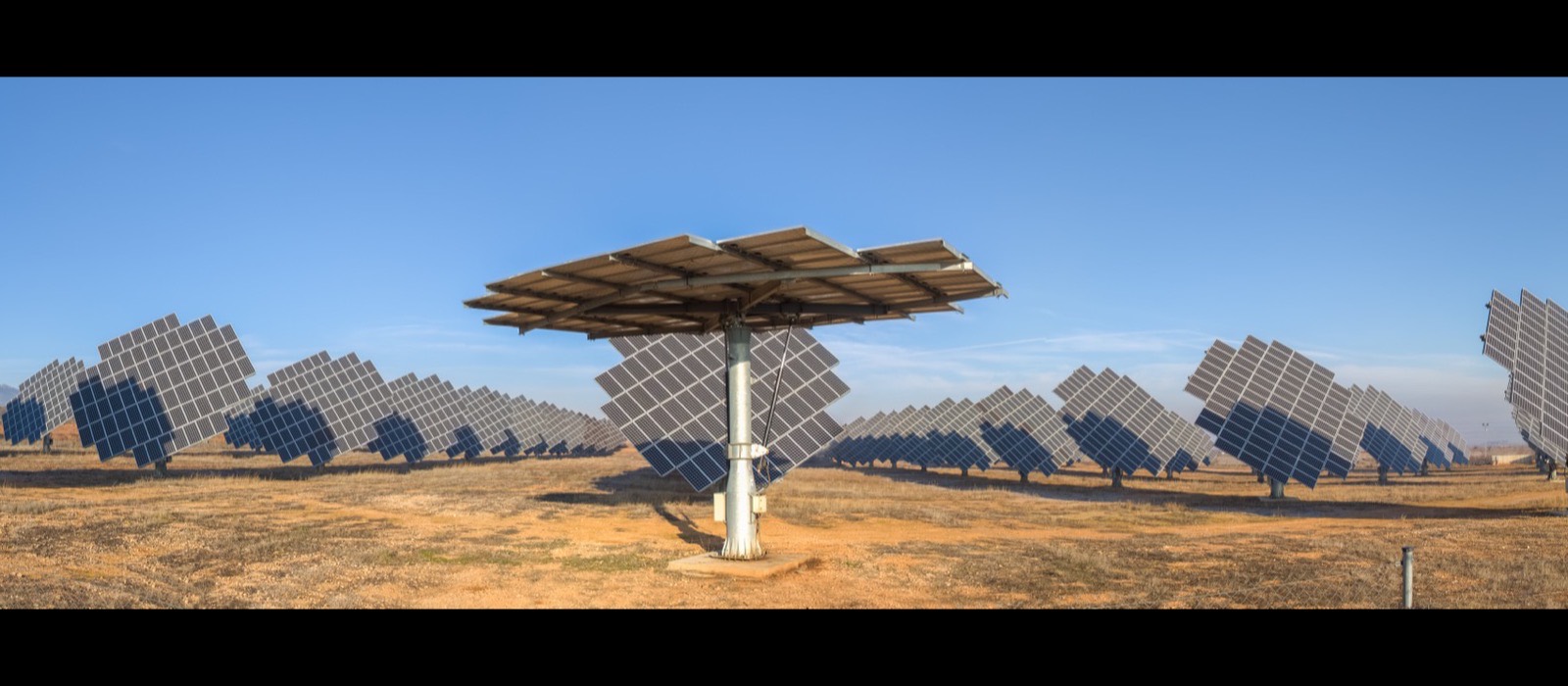
Ask three suppliers what a solar tracker costs and you will get three numbers, and all three will be about hardware. The hardware is the easy part. The number that decides whether the tracker was worth buying is the one nobody puts in a quotation.
The number you will be quoted
Ask for a quotation and what you get back is a hardware number: the price of the tracker system itself. Seen as a share of the whole plant, single-axis tracking typically adds somewhere around 10–15% on top of what the same plant would cost on fixed mounts.
That is the conversation most people have. They compare that percentage against the extra generation they have been promised, decide it looks worthwhile, and buy.
We do not publish tracker prices, and we would be careful of anyone who does. A price quoted without seeing your site is a guess wearing a suit. What we can tell you is which parts of the cost the quotation covers, and which parts it does not.
Illustrative default values — request a site-specific quotation. The percentages on this page are indicative industry proportions, accurate as of 21 August 2026, and are not an Aran quotation.
The number that actually decides it
A tracker only earns money while it is moving. On any day it does not move, you have bought a very expensive fixed mount.
This is not a small risk. Operating data from utility-scale solar plants shows that unscheduled downtime, soiling and component degradation together account for 70–85% of all production losses. A single-axis tracker that has seized or drifted out of alignment leaves its row lying flat through the early morning and late afternoon — which are precisely the hours you bought the tracker for.
The failure is quiet. A stuck row looks fine from the gate. Nothing alarms and nothing smokes. You find it in the generation report a month later, if you are reading the generation report.
Why we say “up to 25%” when others say more
You will see tracking gains quoted at 30% or 35%. We say up to 25%, and the lower number is deliberate.
The higher figures are real, but they come from clean panels, good irradiance and a tracker that works every single day. Indian sites have dust, 45°C afternoons, and maintenance schedules that slip when the plant is three hours from anyone who can fix it. We would rather quote a number you will actually see than one that makes the proposal look better and the first-year report look worse.
If a supplier quotes you 35%, ask them what happens to that number after one dry quarter without cleaning. Their answer to that question is worth more to you than the percentage.
The cost nobody puts in the quotation: dust
Dust, bird droppings and industrial particulates quietly remove a large share of a plant's annual generation in India. Daily soiling losses of around 0.47% are reported, and that compounds through a dry quarter into a serious number if nothing is cleaned.
This matters more for a tracker than for a fixed mount, for a simple reason: you paid extra for a machine whose entire job is to catch more light. A tracker following the sun perfectly under a layer of dust delivers almost none of the gain you paid for.
The honest summary
The tracker hardware is the smaller number, and it is the only one in the quotation. The cost of owning one is cleaning, water, and somebody who notices when a row stops moving. Plants that budget for the first and not the second are the plants where trackers get a bad name.
When a tracker is not worth it
We build trackers, and we will still tell you when not to buy one. There are four situations where you should not.
- Small rooftops. On a roof under roughly 100 kW, the structure, the wind loading and the clearance panels need to rotate rarely justify the cost. Buy fixed mounts and spend the difference on better panels.
- High-wind coastal sites where the structure has not been engineered for the wind zone. A tracker that spends half the year stowed flat is not a tracker.
- Sites with no water and no cleaning plan. If nothing is going to clean the panels, the extra generation you are buying will not arrive.
- Sites nobody visits. If there is no one to notice a stuck row inside a week, the arithmetic stops working.
If your site is one of these, a well-built fixed-mount plant will make you more money than a tracker — and we would rather tell you that now than after you have paid for one.
What a real number needs
Nobody can price your tracker over the phone. A genuine quotation needs your location's irradiance, the shape and slope of your land or roof, your wind zone, your tariff or PPA structure, whether you have water, and who is going to maintain the plant. A number given without those is a guess dressed up as a quotation.
How we price it differently
Because the real risk is uptime rather than hardware, we also offer the tracker on an operating model: you fund a fixed structure, and we carry the performance risk on the tracking itself. If the tracker underperforms, that is our problem rather than yours. It is not right for every site, but it does put the risk with the people who can actually control it.
You can read how that works on the tracker OPEX model page, or see the engineering behind it on the single-axis solar tracker page.
Want a real number for your site?
Tell us where the site is, how big it is, and what you pay for power. Our engineers will come back with a figure built from your conditions — and will say so if a tracker is the wrong answer for you.
Speak to an Engineer