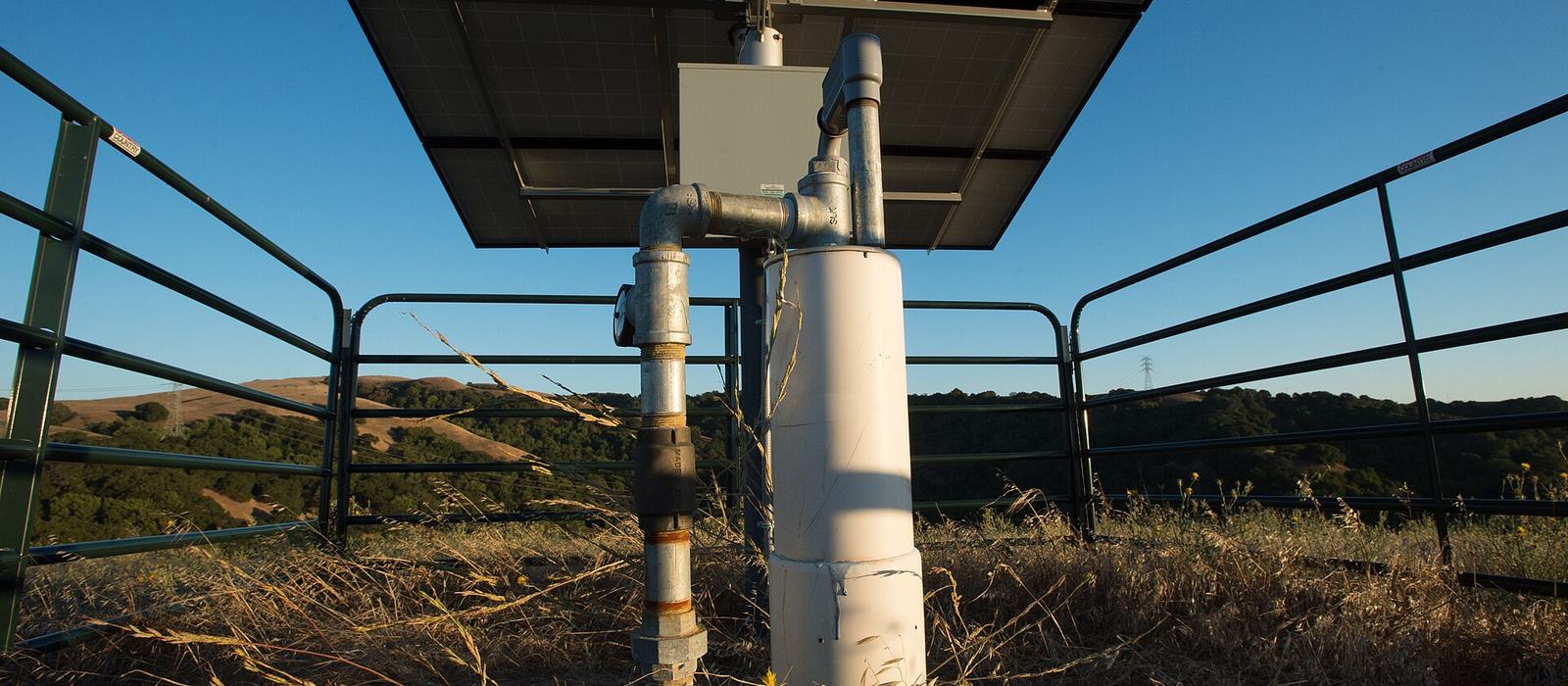
For a small farmer, water is everything — and pumping it is one of the biggest running costs on the farm. Diesel is expensive, grid power is unreliable and often only available at night, and both eat into already thin margins. Solar pumps promised a way out. But there's a catch most farmers discover only after installing one: a fixed solar pump stops working exactly when the field needs it most.
The good news is that this problem has a clear engineering answer — and it's the same technology now transforming large solar farms: the single-axis solar tracker. Here's how it changes the maths for a small farmer running an irrigation pump.
The Problem With a Fixed Solar Pump
A standard solar water pump runs on fixed-mount panels. Those panels produce their full power only for a few hours around midday, when the sun is directly overhead. Early in the morning and late in the afternoon — when the sun sits low in the sky — a fixed panel produces only a fraction of its rated power.
For a farmer, that timing is a real problem. The cooler morning and evening hours are often the best time to irrigate: less water is lost to evaporation, and it fits around the working day. But a fixed solar pump is weakest at exactly those hours. So the farmer is pushed to pump only in the harsh midday heat, or falls back on diesel and grid power to fill the gap — defeating the purpose of going solar.
How a Tracker Fixes This
A single-axis tracker rotates the solar panels to follow the sun from sunrise to sunset. Instead of pointing at one fixed spot in the sky, the panels stay aligned with the sun all day long.
For a solar pump, this means the panels deliver strong, usable power for far more hours of the day. The pump can run at good pressure early in the morning and continue late into the evening — the exact hours a farmer wants to irrigate. In practical terms, a tracker-mounted solar pump moves up to 25% more water over a day than the same pump on fixed panels, and spreads that pumping across a much longer, more useful window.
What this means on the ground
- Irrigate in the cool morning and evening, when less water evaporates and crops absorb it better
- Reduce — and in many cases eliminate — diesel spending for daytime pumping
- Depend less on unreliable, often night-time grid supply
- Pump more water from the same pump and the same panels, at no extra fuel cost
Does It Cost More? Yes — But Look at the Return
A tracker adds some upfront cost compared to a plain fixed mount. That's the honest trade-off. But for a farmer, the return comes back in two ways that matter every single season.
First, fuel savings. Every litre of diesel not burned is money kept. For a farmer currently running a diesel pump for irrigation, the extra solar hours a tracker provides can replace a large share of that diesel cost — and diesel prices only rise over time.
Second, more usable water. More water pumped at the right time of day can mean healthier crops and, in some cases, the ability to irrigate a larger area or add a second crop cycle. For a small farm, that's not a marginal gain — it can be the difference between a tight year and a comfortable one.
A Note on Government Support
Solar irrigation for farmers is actively supported in India through central and state schemes such as PM-KUSUM, which offer subsidies on solar agricultural pumps. Support levels and eligibility change over time and vary by state, so it's always worth checking the current terms with your local agriculture or energy department before you buy. A subsidy can significantly reduce the upfront cost of going solar.
Is a Tracker Right for Every Farm?
Being honest: not every farm needs one. If you have a very small water requirement, or land is extremely tight, a simple fixed solar pump may be enough. Trackers make the most sense when you're pumping a meaningful amount of water daily, when you're currently spending heavily on diesel, or when the timing of irrigation genuinely matters for your crop.
The right way to decide is to look at your actual water needs, your current pumping costs, and your available space — and then compare the numbers. That comparison almost always surprises farmers who assumed a tracker was "only for big solar farms."
The Bigger Picture
The same tracker technology that helps a utility-scale solar plant earn more revenue helps a small farmer pump more water for less money. The principle is identical: follow the sun, and you capture far more of the energy that's falling on your land for free. For a farmer, that free energy turns directly into water in the field and money kept in the pocket.
The product built for exactly this is the Aran Mini Tracker — sized for agricultural pumps and small roofs rather than plant-scale projects.
Wondering if a tracker suits your farm?
Tell us your pump size, your water needs, and your current fuel costs — we'll help you understand whether a solar tracker makes sense for your situation, honestly and with no obligation.
Talk to Our Team