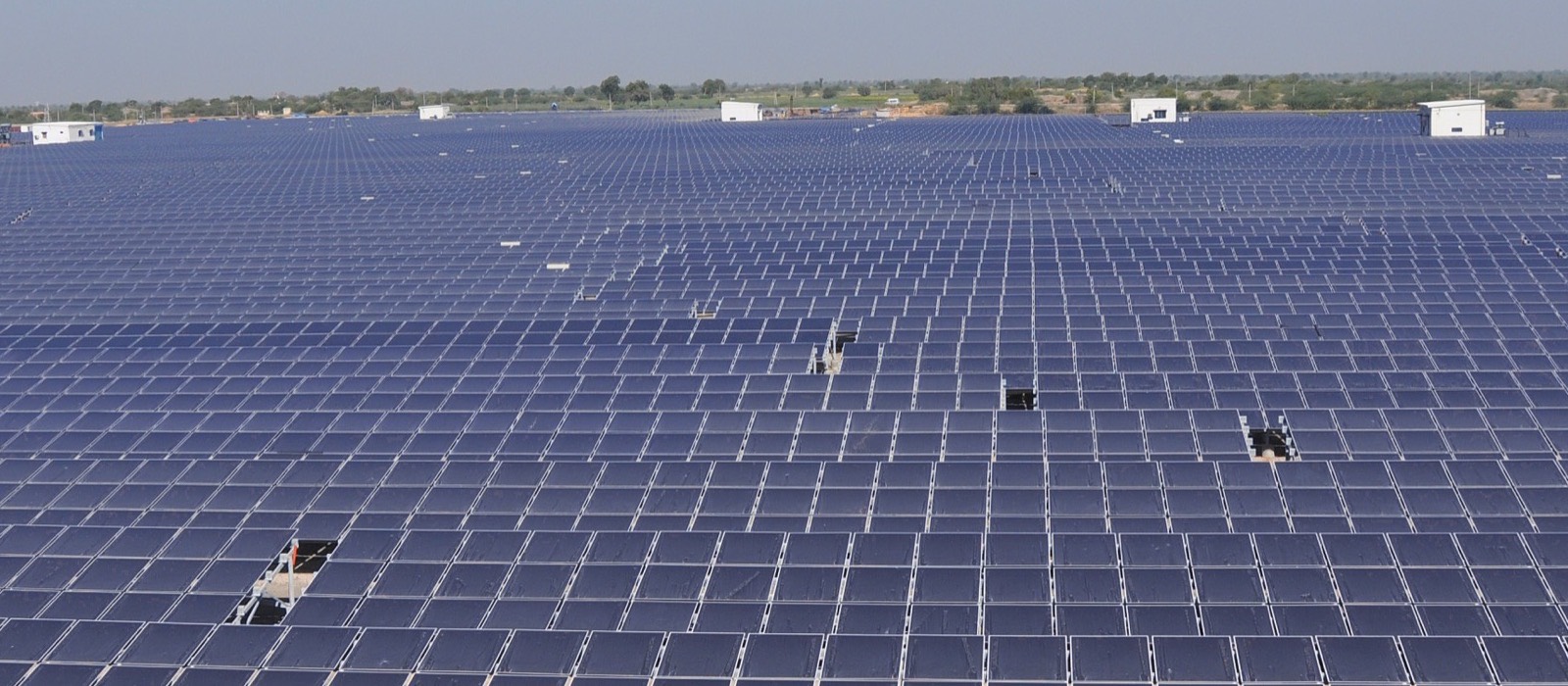
A solar plant is a 25-year financial decision. Three things quietly decide whether it earns what the model promised — and most of them are not on the datasheet. We share them openly, because informed investors make better decisions.
1 · The hidden risk — panels age faster than the datasheet claims
Datasheets promise 25 years — but that's tested in a lab, not in India's 40°C-plus heat and humidity. In real conditions, panels often degrade faster, and effective plant life can fall below 15 years — well short of the financial model. That gap is where returns quietly disappear.
The Aran tracker's raised structure and airflow keep panels cooler, slowing that ageing and holding output closer to the design curve for longer. Read the full guide on panel degradation →
2 · The upgrade trap — fixed structures become a liability
Panel technology jumps almost every year. On a fixed structure, new panel sizes mean tearing it out and rebuilding — full civil work and cost again, sometimes 30–50% of the original structure cost. Your first investment gets thrown away with the old panels.
The Aran structure reuses across panel generations — new panels just mount and connect. Your first investment keeps working. See the tracker-vs-fixed numbers →
3 · The smart capital decision — the structure is an asset, not a sunk cost
Because the Aran structure accepts future panels without replacement, your money is spent once on a platform that keeps earning. When you upgrade panels in year 12 or 15, a fixed plant faces a costly full rebuild — an Aran plant simply swaps the panels. Spend on the structure, spend prudently on panels, and upgrade as technology improves. More on the reusable mounting structure →
How Aran protects long-term returns
Cooler panels, slower ageing
Raised structure and airflow hold output closer to the design curve for longer.
Reusable structure
Takes future panels without a rebuild — the platform keeps earning across generations.
More power per plant
Tracking adds up to 25% more power; the hybrid model lifts output per acre further.
Downside capped
The tracker OPEX model caps your worst case at the fixed-plant outcome.
Measured, not claimed
Generation is metered against a clear baseline — you see the real numbers.
Honest engineering
We state limitations up front, so there are no surprises over the plant's life.
Our transparency principle
We'd rather tell you the real risks than sell you a number. Every figure we share is illustrative and site-dependent, and we'll always show you how it's measured. When you understand exactly what you're buying, the partnership is stronger — for all 25 years.
Model it on your own numbers
See how the tracker OPEX model shares the extra power while capping your downside — and try it with your own plant details. Open the tracker OPEX calculator → · See zero-investment rooftop solar →
Common questions
Why do solar panels age faster than the datasheet says?
Datasheet life is tested in a lab, not in India's 40°C-plus heat and humidity. In real conditions panels often degrade faster, and effective plant life can fall below 15 years — short of the 25 years the financial model assumed. A raised, well-ventilated structure that keeps panels cooler slows this ageing.
Why can a fixed structure become a liability?
Panel technology changes almost every year. On a fixed structure, new panel sizes often mean tearing it out and rebuilding — full civil work and cost again, sometimes 30% to 50% of the original structure cost. A reusable structure takes the new panels without a rebuild.
How does Aran protect long-term solar returns?
By keeping panels cooler to slow ageing, using a reusable structure that accepts future panels without a rebuild, measuring generation transparently, and offering an OPEX model where the downside is capped at the fixed-plant outcome. The aim is a plant that keeps earning close to its design curve for its full life.
Is this financial or investment advice?
No. This is general education about solar plant engineering and economics. All figures are illustrative and depend on your site. It's not financial or investment advice — please take your own professional advice for any investment decision.
Want this modelled on your project?
Share your site and plans and we will walk you through the real numbers — panel ageing, structure reuse and the OPEX options — with an illustrative estimate. This is general education, not financial advice.
Talk to our engineers